Table of contents
Managing payments for a digital business becomes more complex as the company grows. You usually start with one provider and one market. Then come more countries, higher volumes, and additional payment methods. And with them, more processors, more rules, and more decisions to ensure every transaction goes through smoothly.
A payment orchestrator exists precisely to handle this complexity. It works as a layer on top of PSPs, processors, and payment methods, allowing the entire payment operation to be managed from a single point. From there, the business defines the rules, and the system automatically decides how each payment should be processed based on factors such as country, card type, amount, or the outcome of previous attempts.
Having this layer of control changes how payments are managed. There is no need to multiply integrations or rely on manual processes to keep everything running. Operations become more efficient, technical dependency is reduced, and the business gains a stronger foundation to improve conversion, optimize costs, and free up team time for higher-value work.
What is a payment orchestrator
A payment orchestrator is a platform that automatically routes each transaction to the most suitable payment based on to business rules, acting as a control layer above PSPs and processors.
Instead of integrating and managing each PSP or method independently, the orchestrator sits above all of them and centralizes the decision logic. The business defines the rules and the system automatically decides how each transaction is processed.
This approach removes the need for merchants to build and maintain their own routing logic. The orchestrator takes on that responsibility and applies the rules centrally, reducing technical overhead and manual intervention in day-to-day operations.
That’s why the payment orchestrator is often a key piece in companies operating across multiple countries, handling high transaction volumes, or working with a wide range of payment methods. It allows them to retain control as complexity grows.
How a payment orchestrator works
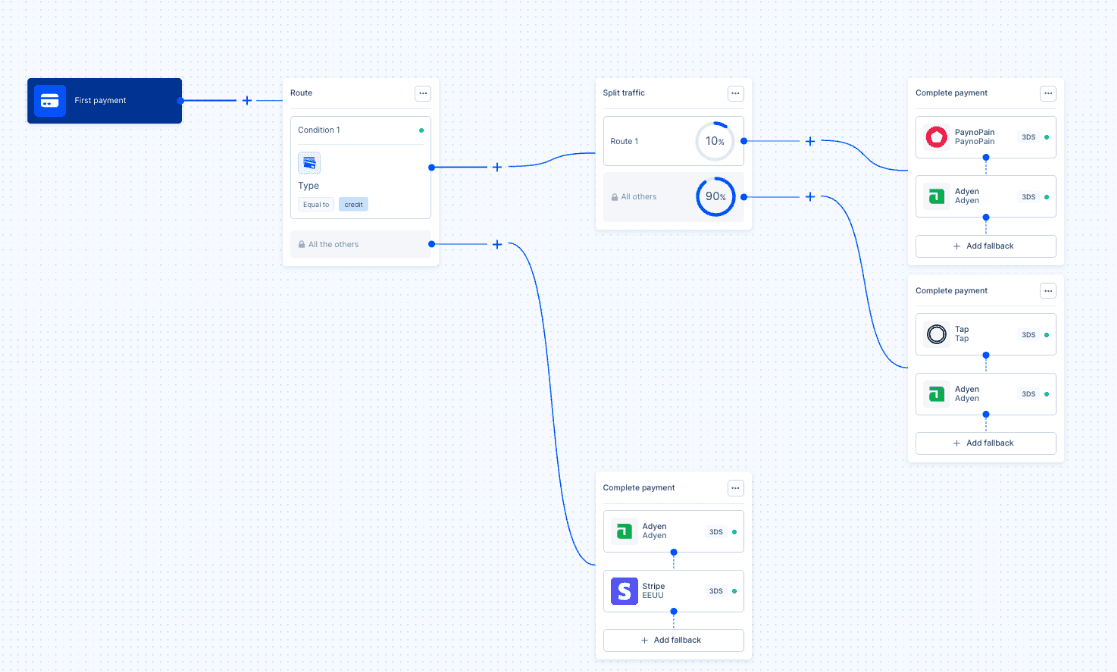
When a customer initiates a payment, the payment orchestrator acts as the entry point for the transaction. Instead of sending it directly to a single provider, it receives it and decides how it should be processed according to the rules defined by the business.
These rules can take into account factors such as:
the customer's country,
the card type,
the transaction amount,
the outcome of previous attempts,
and many other variables
Based on this information, the orchestrator automatically selects the most appropriate PSP or processor and routes the payment accordingly.
If the payment fails on the first attempt, the orchestrator can apply fallback logic and resend the transaction to an alternative provider. This happens without the customer having to repeat the payment and without manual intervention from the merchant’s team.
All of this runs in real time and remains invisible to the end user. For the business, it means having a control layer that automates decisions, reduces incidents, and avoids having to change integrations every time the context evolves.
In the case of Zru, this logic is managed from a single dashboard, without writing code. Payment teams can define rules, adjust processing paths, and analyze results centrally, keeping control even as volumes, markets, or providers increase.
What a payment orchestrator enables
By adding a decision layer above other payment providers, a payment orchestrator gives businesses more flexibility as they scale. In practice, this means:
Improving conversion
Each transaction is processed through the option with the highest probability of success based on variables such as country, card type, or previous attempts.
Optimizing costs
It enables the combined use of multiple providers instead of concentrating all volume on a single processor. By defining routing rules based on factors such as fees, geography, or transaction type, payments can be sent to the most cost-effective option in each case. This makes it easier to control processing costs over time and avoid inefficiencies as volumes and markets grow.
Reducing the operational burden on the team
Rules are defined once and applied automatically, without having to intervene transaction by transaction. When changes are needed, they can be made quickly. In orchestrators like Zru, this is done directly from the dashboard, without code.
Eliminating repetitive tasks
Automated logic reduces constant reviews and simplifies the day-to-day management of the payment operation.
Maintaining control as the business grows
The payment system scales without losing control, even as providers, markets, or transaction volumes increase.
As a result, payments stop being managed as a collection of isolated integrations and start working as a centralized, flexible system aligned with business goals.
What to consider when choosing a payment orchestrator
Not all payment orchestrators offer the same level of control or adapt equally well to every business. There are several key aspects worth evaluating.
Flexibility to define routing rules
Rules should reflect how the business actually operates. That requires working with multiple variables and combining them as needed. In Zru, for example, there are more than 30 predefined variables, and custom variables can be created directly from the dashboard without additional development.
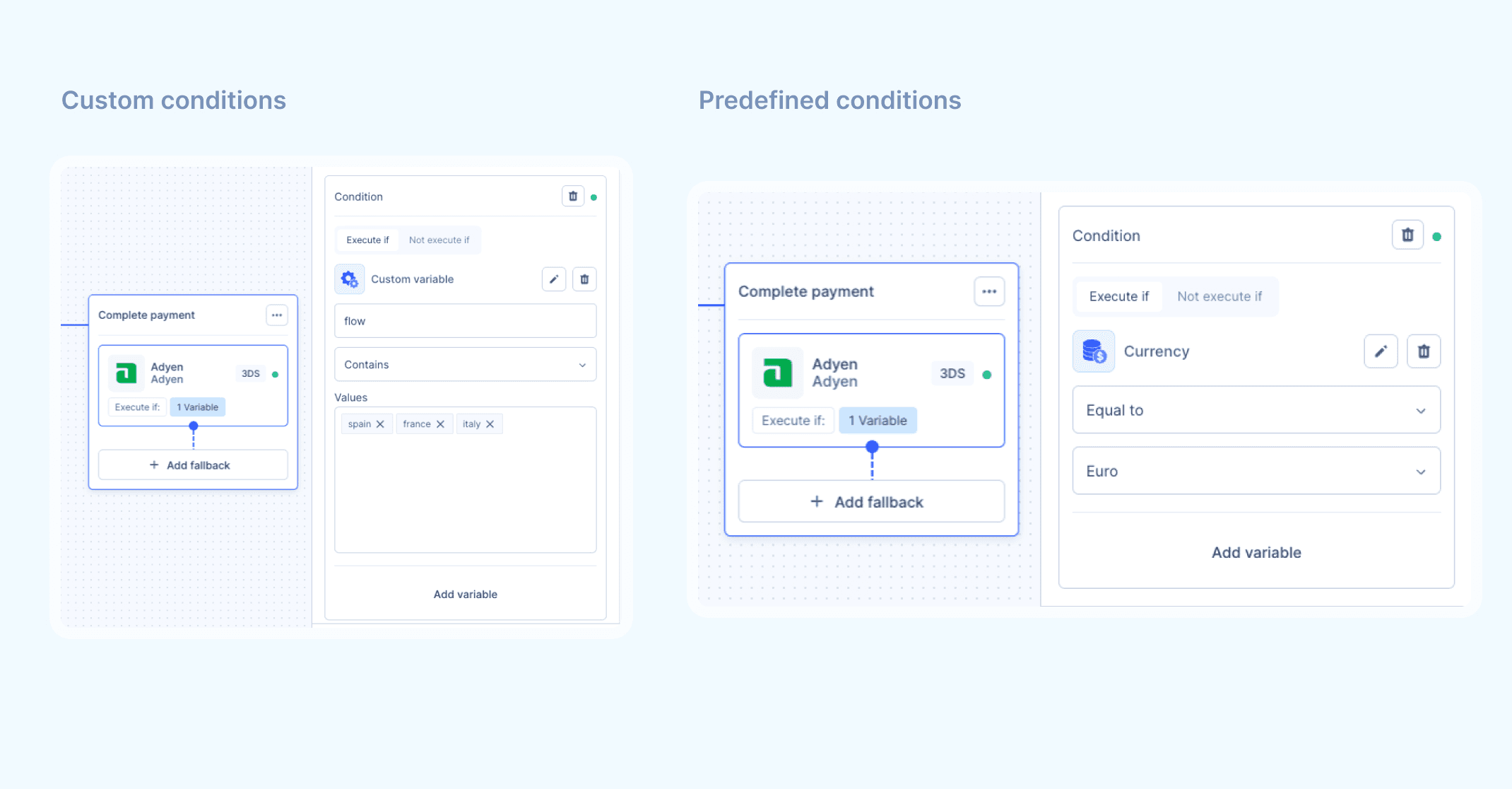
Ability to make changes without technical effort
The less dependent changes are on engineering teams, the more agile daily operations become. Being able to adjust rules, priorities, or fallback scenarios without code makes a clear difference when choosing a payment orchestrator.
Compatibility with various payment providers
An orchestrator should support multiple PSPs and processors, both local and international, without limiting the payment strategy. Zru connects with more than 200 PSPs and payment methods so merchants can use exactly what they need.
Control and visibility of operations
Having a clear view of what is happening with payments, how they are routed, and what results they generate helps teams make better decisions based on real data.
Checkout customization
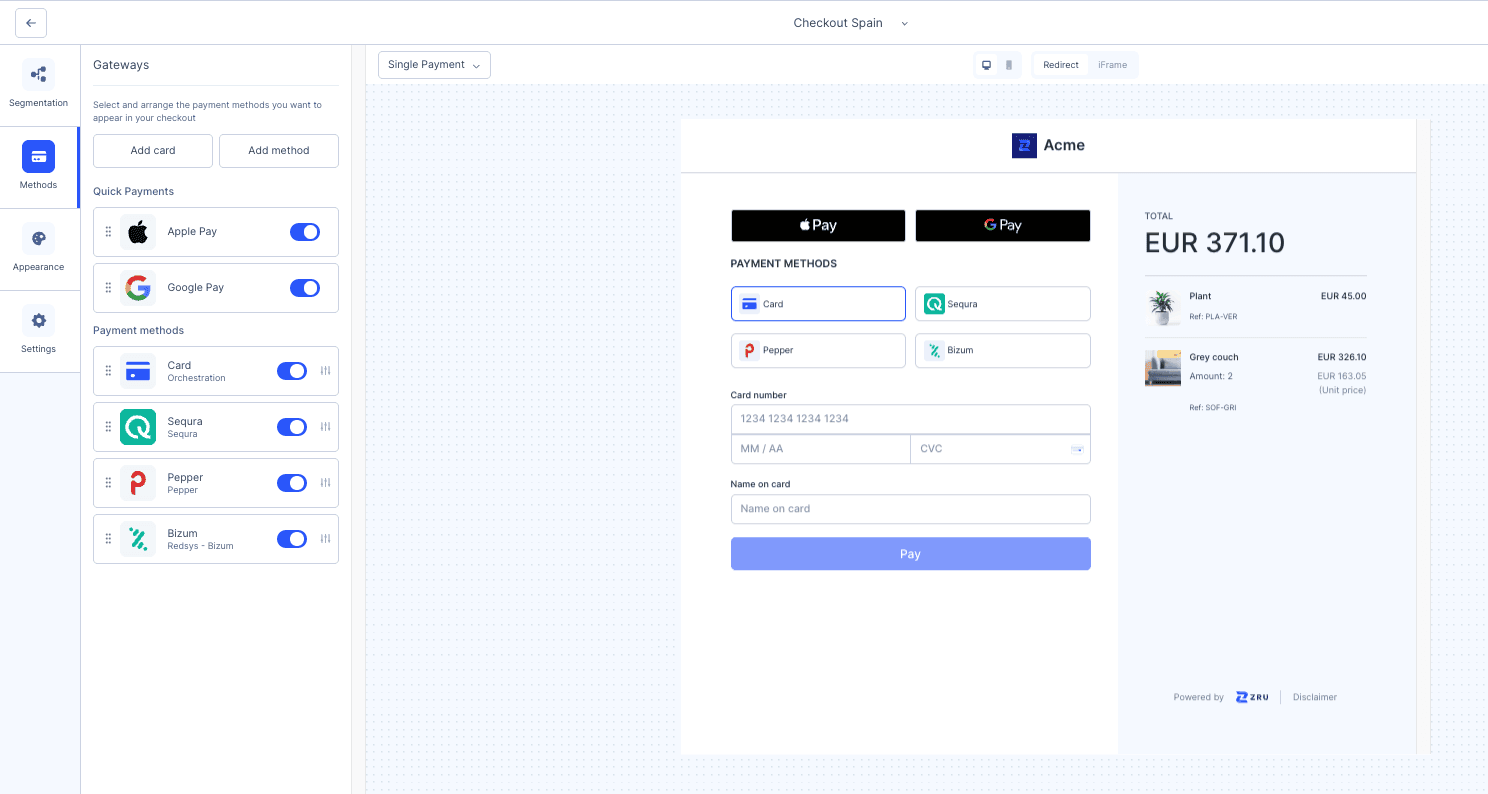
Beyond defining how payments are processed, a payment orchestrator can also allow checkout customization based on the context of each transaction, without code and directly from the dashboard. Deciding which methods are shown, in what order, or how the experience adapts by country or channel helps align payment operations with the end-user experience.
In summary
A payment orchestrator is a technology platform that allows businesses to define and manage how payments are processed when working with multiple providers, processors, or payment methods at the same time.
Instead of operating each integration separately, it centralizes the decision logic in a single layer and applies it consistently across the entire operation.
Using a payment orchestrator makes it possible to retain control as complexity increases, without technical intervention. Payments are managed through a single system that adapts as the business evolves.
You can learn more about orchestration by reading this post: What is payment orchestration and how does it help your online business?
You can also start using Zru today to orchestrate your payment operations.
Frequently asked questions
What are the main advantages of using a payment orchestrator?
Companies and businesses that use a payment orchestrator gain several advantages:
Create fallbacks: if a payment fails, it can be automatically resent through another processor or PSP to increase the chances of success.
They can create rules to decide with which provider to process each transaction based on the most favorable conditions (lower cost, higher reliability, better approval rate).
They can define when to apply 3D Secure and in which cases to skip it, balancing security and conversion.
What are the main advantages of using a payment orchestrator?
Companies and businesses that use a payment orchestrator gain several advantages:
Create fallbacks: if a payment fails, it can be automatically resent through another processor or PSP to increase the chances of success.
They can create rules to decide with which provider to process each transaction based on the most favorable conditions (lower cost, higher reliability, better approval rate).
They can define when to apply 3D Secure and in which cases to skip it, balancing security and conversion.
What are the main advantages of using a payment orchestrator?
Companies and businesses that use a payment orchestrator gain several advantages:
Create fallbacks: if a payment fails, it can be automatically resent through another processor or PSP to increase the chances of success.
They can create rules to decide with which provider to process each transaction based on the most favorable conditions (lower cost, higher reliability, better approval rate).
They can define when to apply 3D Secure and in which cases to skip it, balancing security and conversion.
What is a payment orchestrator?
A payment orchestrator is a technological platform that, by being connected to various payment providers (PSPs, processors, payment methods, etc.), allows to "route" each payment through the most convenient provider in each case.
In Zru, this "orchestration" is done automatically and managed from the panel without the need for development.
What is a payment orchestrator?
A payment orchestrator is a technological platform that, by being connected to various payment providers (PSPs, processors, payment methods, etc.), allows to "route" each payment through the most convenient provider in each case.
In Zru, this "orchestration" is done automatically and managed from the panel without the need for development.
What is a payment orchestrator?
A payment orchestrator is a technological platform that, by being connected to various payment providers (PSPs, processors, payment methods, etc.), allows to "route" each payment through the most convenient provider in each case.
In Zru, this "orchestration" is done automatically and managed from the panel without the need for development.
Table of contents
Managing payments for a digital business becomes more complex as the company grows. You usually start with one provider and one market. Then come more countries, higher volumes, and additional payment methods. And with them, more processors, more rules, and more decisions to ensure every transaction goes through smoothly.
A payment orchestrator exists precisely to handle this complexity. It works as a layer on top of PSPs, processors, and payment methods, allowing the entire payment operation to be managed from a single point. From there, the business defines the rules, and the system automatically decides how each payment should be processed based on factors such as country, card type, amount, or the outcome of previous attempts.
Having this layer of control changes how payments are managed. There is no need to multiply integrations or rely on manual processes to keep everything running. Operations become more efficient, technical dependency is reduced, and the business gains a stronger foundation to improve conversion, optimize costs, and free up team time for higher-value work.
What is a payment orchestrator
A payment orchestrator is a platform that automatically routes each transaction to the most suitable payment based on to business rules, acting as a control layer above PSPs and processors.
Instead of integrating and managing each PSP or method independently, the orchestrator sits above all of them and centralizes the decision logic. The business defines the rules and the system automatically decides how each transaction is processed.
This approach removes the need for merchants to build and maintain their own routing logic. The orchestrator takes on that responsibility and applies the rules centrally, reducing technical overhead and manual intervention in day-to-day operations.
That’s why the payment orchestrator is often a key piece in companies operating across multiple countries, handling high transaction volumes, or working with a wide range of payment methods. It allows them to retain control as complexity grows.
How a payment orchestrator works
When a customer initiates a payment, the payment orchestrator acts as the entry point for the transaction. Instead of sending it directly to a single provider, it receives it and decides how it should be processed according to the rules defined by the business.
These rules can take into account factors such as:
the customer's country,
the card type,
the transaction amount,
the outcome of previous attempts,
and many other variables
Based on this information, the orchestrator automatically selects the most appropriate PSP or processor and routes the payment accordingly.
If the payment fails on the first attempt, the orchestrator can apply fallback logic and resend the transaction to an alternative provider. This happens without the customer having to repeat the payment and without manual intervention from the merchant’s team.
All of this runs in real time and remains invisible to the end user. For the business, it means having a control layer that automates decisions, reduces incidents, and avoids having to change integrations every time the context evolves.
In the case of Zru, this logic is managed from a single dashboard, without writing code. Payment teams can define rules, adjust processing paths, and analyze results centrally, keeping control even as volumes, markets, or providers increase.
What a payment orchestrator enables
By adding a decision layer above other payment providers, a payment orchestrator gives businesses more flexibility as they scale. In practice, this means:
Improving conversion
Each transaction is processed through the option with the highest probability of success based on variables such as country, card type, or previous attempts.
Optimizing costs
It enables the combined use of multiple providers instead of concentrating all volume on a single processor. By defining routing rules based on factors such as fees, geography, or transaction type, payments can be sent to the most cost-effective option in each case. This makes it easier to control processing costs over time and avoid inefficiencies as volumes and markets grow.
Reducing the operational burden on the team
Rules are defined once and applied automatically, without having to intervene transaction by transaction. When changes are needed, they can be made quickly. In orchestrators like Zru, this is done directly from the dashboard, without code.
Eliminating repetitive tasks
Automated logic reduces constant reviews and simplifies the day-to-day management of the payment operation.
Maintaining control as the business grows
The payment system scales without losing control, even as providers, markets, or transaction volumes increase.
As a result, payments stop being managed as a collection of isolated integrations and start working as a centralized, flexible system aligned with business goals.
What to consider when choosing a payment orchestrator
Not all payment orchestrators offer the same level of control or adapt equally well to every business. There are several key aspects worth evaluating.
Flexibility to define routing rules
Rules should reflect how the business actually operates. That requires working with multiple variables and combining them as needed. In Zru, for example, there are more than 30 predefined variables, and custom variables can be created directly from the dashboard without additional development.
Ability to make changes without technical effort
The less dependent changes are on engineering teams, the more agile daily operations become. Being able to adjust rules, priorities, or fallback scenarios without code makes a clear difference when choosing a payment orchestrator.
Compatibility with various payment providers
An orchestrator should support multiple PSPs and processors, both local and international, without limiting the payment strategy. Zru connects with more than 200 PSPs and payment methods so merchants can use exactly what they need.
Control and visibility of operations
Having a clear view of what is happening with payments, how they are routed, and what results they generate helps teams make better decisions based on real data.
Checkout customization
Beyond defining how payments are processed, a payment orchestrator can also allow checkout customization based on the context of each transaction, without code and directly from the dashboard. Deciding which methods are shown, in what order, or how the experience adapts by country or channel helps align payment operations with the end-user experience.
In summary
A payment orchestrator is a technology platform that allows businesses to define and manage how payments are processed when working with multiple providers, processors, or payment methods at the same time.
Instead of operating each integration separately, it centralizes the decision logic in a single layer and applies it consistently across the entire operation.
Using a payment orchestrator makes it possible to retain control as complexity increases, without technical intervention. Payments are managed through a single system that adapts as the business evolves.
You can learn more about orchestration by reading this post: What is payment orchestration and how does it help your online business?
You can also start using Zru today to orchestrate your payment operations.
Frequently asked questions
What are the main advantages of using a payment orchestrator?
Companies and businesses that use a payment orchestrator gain several advantages:
Create fallbacks: if a payment fails, it can be automatically resent through another processor or PSP to increase the chances of success.
They can create rules to decide with which provider to process each transaction based on the most favorable conditions (lower cost, higher reliability, better approval rate).
They can define when to apply 3D Secure and in which cases to skip it, balancing security and conversion.
What is a payment orchestrator?
A payment orchestrator is a technological platform that, by being connected to various payment providers (PSPs, processors, payment methods, etc.), allows to "route" each payment through the most convenient provider in each case.
In Zru, this "orchestration" is done automatically and managed from the panel without the need for development.